Social Studies
At Woodgrove Primary School, Social Studies develops Woodgrovians as thoughtful citizens who understand Singapore, appreciate the diversity of people and cultures, and recognise our connections with the region and the wider world.
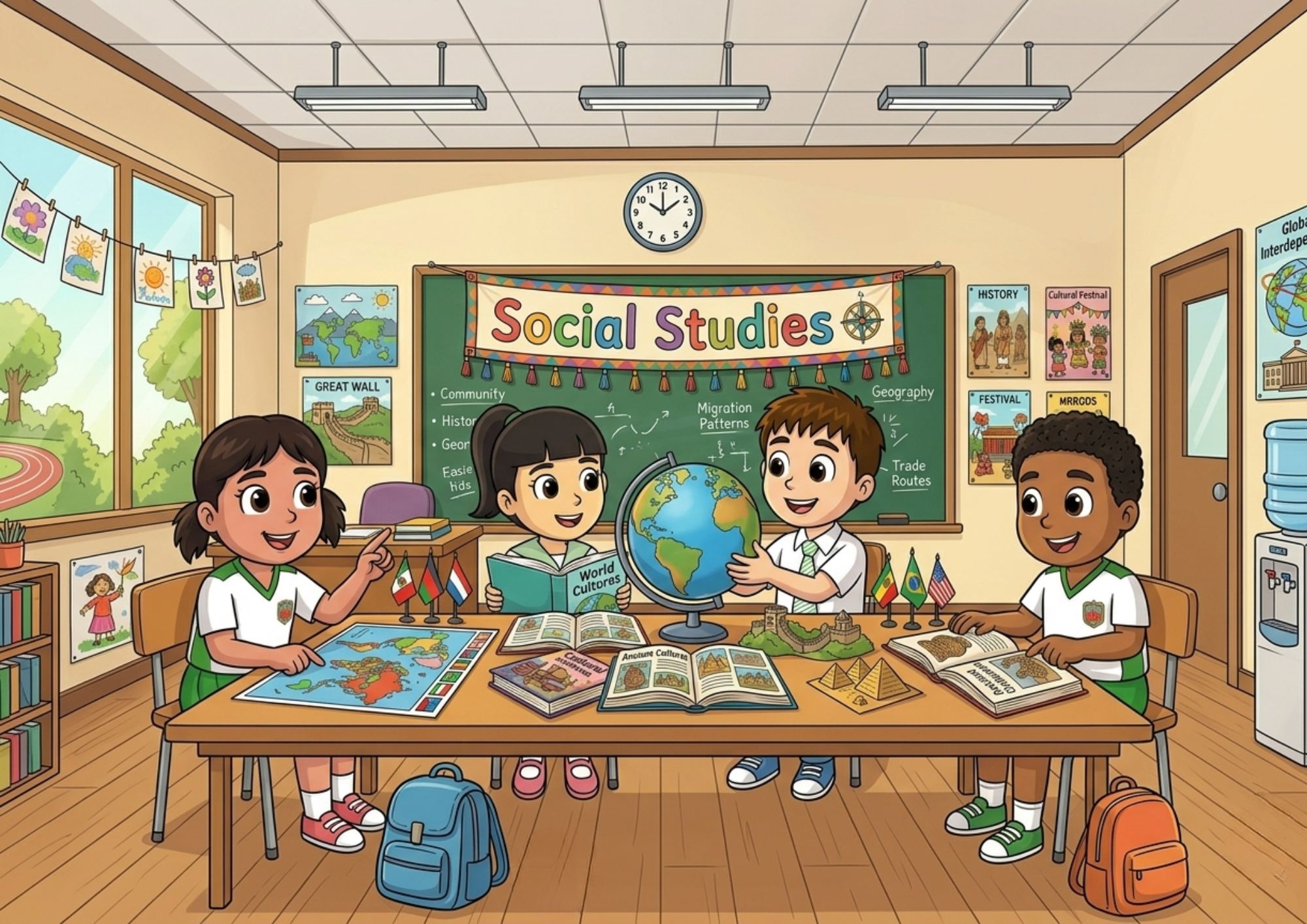
Through meaningful issues and authentic contexts, students grow in knowledge, develop inquiry skills and learn values that help them make responsible decisions and contribute to society.
Informed, Concerned and Participative Citizens
Aligned with the MOE 2020 Social Studies Primary Teaching and Learning Syllabus, the curriculum aspires to develop students as informed, concerned and participative citizens with a regional and global outlook. At Woodgrove, these outcomes connect directly with our aspiration for every Woodgrovian to grow as a contributor and leader with character.
Curriculum Aims of Social Studies
INFORMED | Understand identity, culture and heritage; make sense of Singapore’s past and present; consider multiple perspectives; and make well-reasoned, responsible decisions. |
CONCERNED | Develop a sense of belonging, care for society and the environment, appreciate cultural diversity, and consider how decisions affect others. |
PARTICIPATIVE | Take responsible personal and collective action for the good of society, contribute constructively, and remain resilient when addressing challenges. |
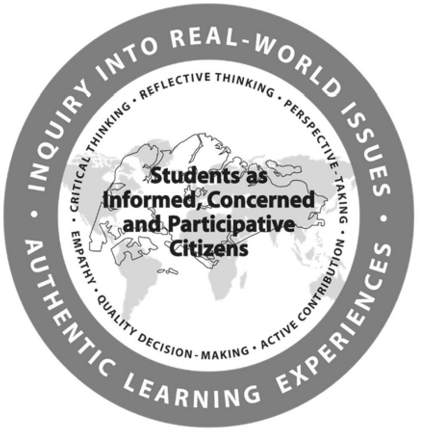
MOE Social Studies learner outcomes: informed, concerned and participative citizenship.
Learning through Inquiry
The Humanities Inquiry Approach places students at the centre of learning. Woodgrovians are encouraged to ask meaningful questions, gather and examine information, exercise reasoning and reflect on what they have learnt. Inquiry enables students to appreciate multiple perspectives and supports thoughtful decision-making - an important foundation for responsible citizenship and self-leadership.
The Inquiry Process
Spark Curiosity Ask questions and connect issues to lived experiences. | Gather Data Locate, observe and collect relevant information from varied sources. | Exercise Reasoning | Reflect Review learning, values and possible responsible action. |
Developing E21CC and iGR3ACE through Social Studies
The knowledge, skills and values of Social Studies provide authentic opportunities to develop Emerging 21st Century Competencies (E21CC) and to live out Woodgrove’s iGR3ACE values. Woodgrovians learn to think critically, communicate and collaborate respectfully, use information responsibly and understand issues from civic, regional and global perspectives.
21st Century Competencies
Critical, Adaptive & Inventive Thinking | Inquiry, evidence-based reasoning and reflection strengthen discernment, adaptability and responsible decision-making. This supports Integrity, Responsibility, Resilience and Courage. |
Communication, Collaboration & Information Skills | Students express ideas, listen to different viewpoints, collaborate with peers and use information responsibly. This strengthens Respect, Empathy, Integrity and Responsibility. |
Civic, Global & Cross-Cultural Literacy | Students deepen their sense of belonging to Singapore, appreciate diversity, understand regional and global connections and recognise their responsibility to the common good. This nurtures Gratefulness, Respect, Adaptability and Empathy. |
Learning across Different Modes
Woodgrovians learn Social Studies through a blend of classroom, digital and field-based experiences. These include activity books and textbooks, big books and e-books, SLS resources for consolidation and extension, maps and image sources, collaborative inquiry and Learning Journeys.
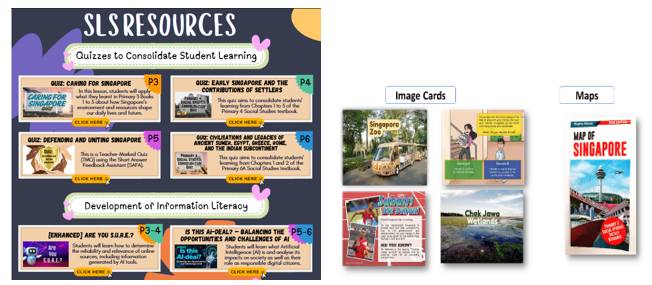
Digital and visual resources support consolidation, information literacy, evidence gathering and extension of learning.
A Six-Year Progression in Citizenship Learning
The Social Studies syllabus is organised into three broad clusters - from discovering self and the immediate environment, to understanding Singapore in the past and present, and finally to appreciating Singapore, the region and the world. This progression supports Woodgrovians in moving from understanding self and community to developing broader civic, regional and global perspectives.
Alignment of Social Studies Syllabus to Strategic Thrust 2
Level | Syllabus Focus / Inquiry | Connection to Strategic Thrust 2 |
P1 | Knowing Myself, Others and My Surroundings | Self-awareness, responsibility, care for others and belonging. |
P2 | Coming Together as a Nation | Appreciation of diversity, common experiences and shared national identity. |
P3 | Understanding Singapore’s Environment and Challenges | Responsibility for resources and environment; resilience and adaptability. |
P4 | Understanding Our Past | Gratitude, identity and appreciation of the contributions and resilience of those before us. |
P5 | Understanding Singapore’s Development as a Nation; Understanding Southeast Asia’s Diversity and Interconnectedness | Civic responsibility, national development, regional awareness and cross-cultural literacy. |
P6 | Understanding Features and Legacies of Civilisations | Global awareness, appreciation of heritage, multiple perspectives and interconnectedness. |
Field-based learning (Learning Journeys) makes citizenship learning visible and authentic: Woodgrovians observe, ask questions, interact with people and places, collect evidence, make connections and reflect on how their learning relates to life in Singapore and beyond. | ||
Learning Journeys - Inquiry beyond the Classroom
Learning Journeys are a key form of field-based learning in Social Studies. They allow students to contextualise concepts in authentic settings, engage in multi-sensory exploration and construct new knowledge through direct encounters with people, places, artefacts and stories.
These authentic learning experiences also enable iGR³ACE Values in Action:
Gratefulness for those who came before us • Respect for our heritage and community • Responsibility in preserving our shared stories • Strengthening our sense of belonging and national identity
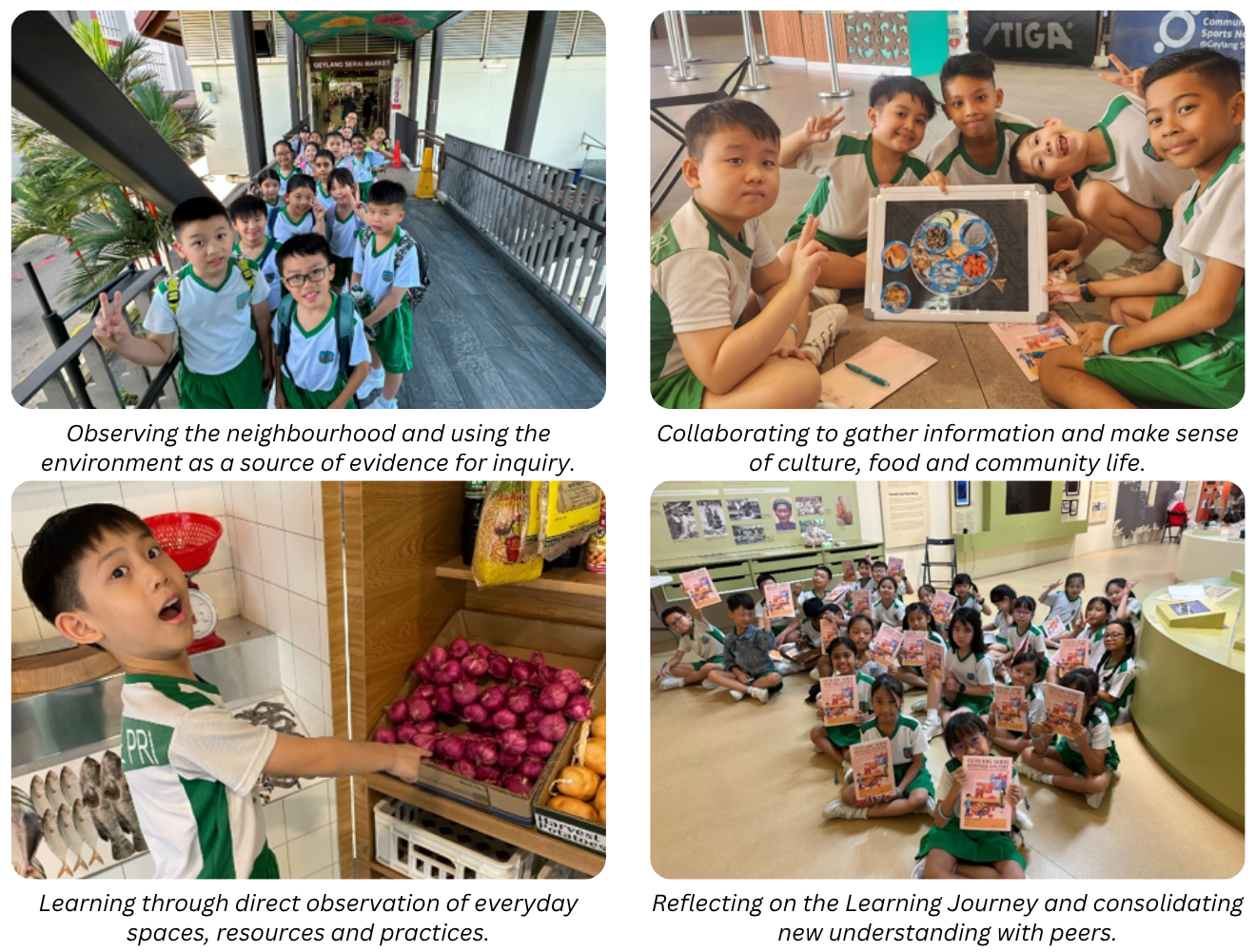
Primary 3 - Learning Journey to Geylang Serai
Woodgrovians explore a familiar Singapore neighbourhood to observe how people interact with their environment, how places meet community needs and how culture is experienced in everyday life. The journey strengthens observation, curiosity, respect and appreciation of Singapore’s diverse communities.
Primary 4 - Learning Journey to Kreta Ayer Heritage Gallery
Through heritage sites, stories and artefacts, Woodgrovians connect Singapore’s past with life today. They learn to appreciate how the experiences, contributions and resilience of earlier generations have shaped our communities and national identity.
.png)
Primary 5 - Learning Journey to Indian Heritage Centre
Woodgrovians deepen their understanding of Singapore’s multicultural society by exploring the heritage, experiences and contributions of the Indian community. The experience nurtures respect, empathy and cross-cultural literacy while helping students appreciate how diverse communities contribute to Singapore’s development and shared identity.
.png)
Primary 6 - Learning Journey to Asian Civilisations Museum
At the Asian Civilisations Museum, Woodgrovians explore features and legacies of civilisations and consider how ideas, beliefs, trade, art and culture continue to influence lives today. This develops global awareness and helps students recognise Singapore’s connections with Asia and the wider world.
.png)
Every Woodgrovian: Informed, Concerned and Ready to Contribute
Through classroom inquiry, digital learning and authentic Learning Journeys, Social Studies helps Woodgrovians understand who they are, how Singapore has developed, how our society is connected to the region and world, and why their choices matter. In doing so, the subject contributes directly to Character, Our Foundation - nurturing students who think with discernment, care with empathy and act responsibly for the common good.